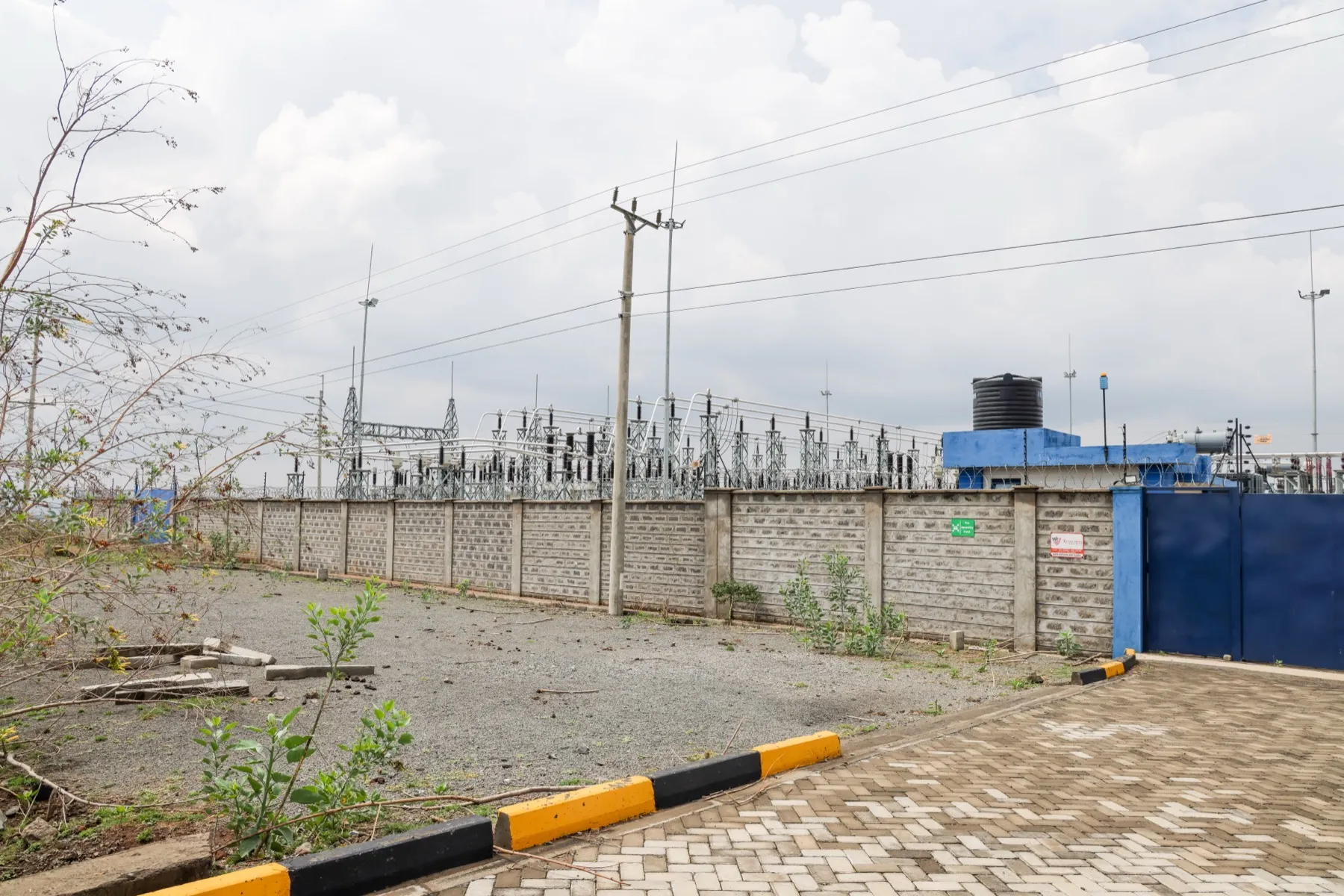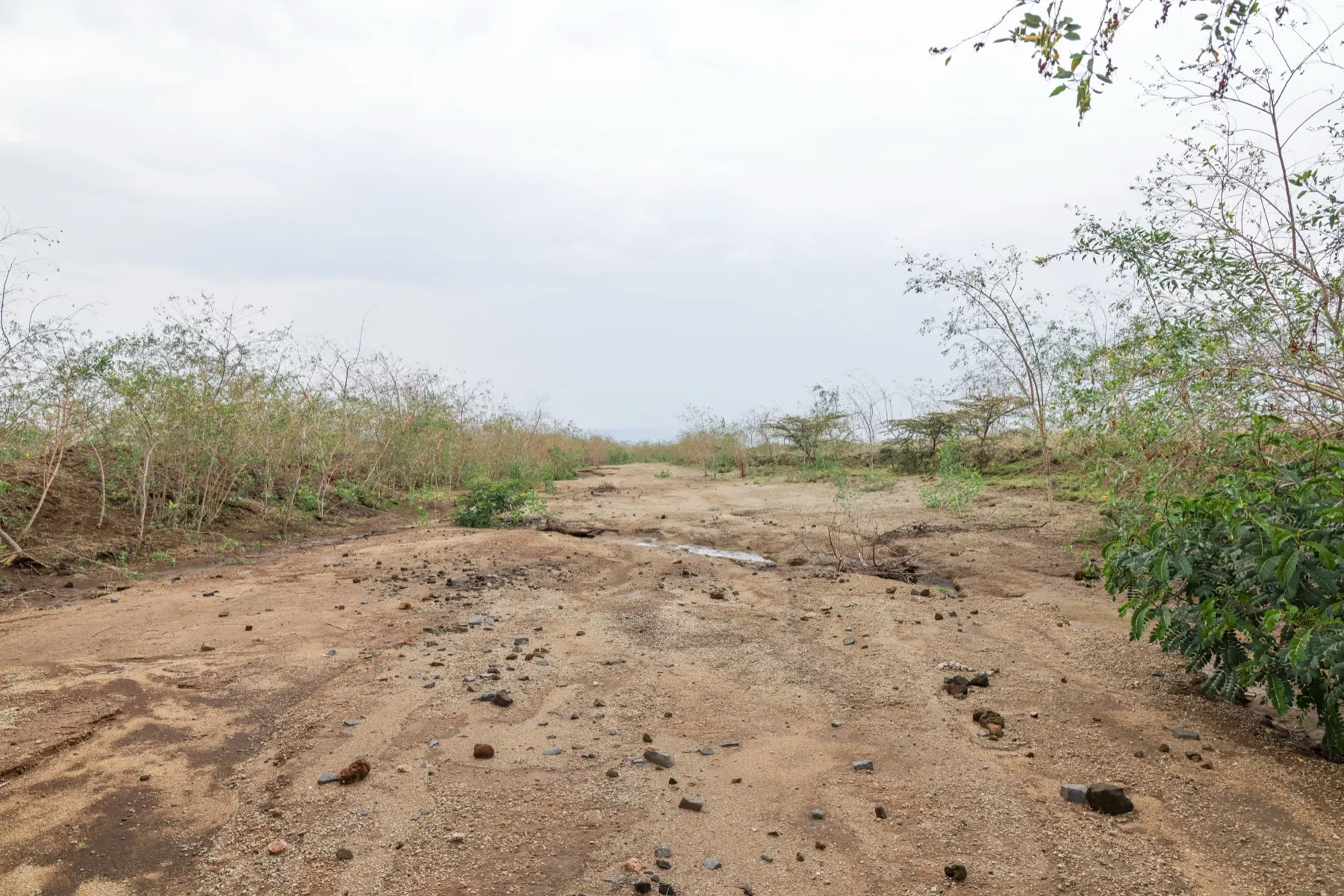

Building now The Hells Gate site at Naivasha, open ground, dirt access road, Rift Valley sky
Navon

We are building a full-stack AI company in public.

Navon is a deep tech infrastructure company. We own the foundation, which is modular data centres, server systems and the network, and we build upward from it into sovereign cloud, managed inference, data and models, and the agents and applications on top. A quantum-safe security fabric runs across all of it. Owning the metal is the thing that lets everything above it actually be sovereign, rather than sovereign in the marketing.

Naivasha SEZ, Kenya · Full-stack sovereign AI infrastructure

Base to agents
What we build
In-country
Data, keys and operations
1.29
PUE on our own metal
95%
Geothermal baseload

Most AI companies rent their compute from someone else. We are building ours, and posting each layer as it lands. The log runs newest first, which means it reads down through the stack: agents and applications at the top, the data centre foundation at the bottom. Where a layer is still in design, the post says so.

Layer
Navon ● verified
Applications and agents · Stage 08
In design

The top of the stack is where the value actually lands. Domain agents, reusable skills and vertical applications, running on your own infrastructure instead of somebody else's API.

This is the layer people usually buy first and regret later, because an agent is only as sovereign as the compute underneath it. Building down from the application is how organisations end up with their data in someone else's region. We are building up to it instead, which is slower and is the right order. This layer is in design and not yet available.

#agents #fullstack
Navon ● verified
Data and models · Stage 07
In design

Sovereign data, modelled as connected objects and the actions on them. Not a warehouse you query, but an ontology that knows what a patient, a meter, a claim or a student is inside your organisation, and what may be done to each.

Above it sit the models: open-weight and custom, including African-language models. A continent whose languages are missing from the frontier models will keep paying to translate itself into somebody else's. Both layers are in design.

#dataontology #africanlanguages

Attached · the intelligence layerIn design
  • Data lake and ontology, sovereign data as connected objects
  • Open-weight and custom models, including African-language models
  • Forge, the software factory: sandboxes, harnesses and governed delivery
Browse by layer Stage 07
Navon ● verified
Cyber security · Stage 06
Designed in

Security is not a layer, it is a fabric. It wraps every other layer, from the metal to the applications, and it is quantum-safe by design rather than by later migration.

The reason to settle this at the start is that harvest-now, decrypt-later is already happening. Traffic captured today can be stored until a machine exists that can open it. Anything carrying a twenty-year confidentiality requirement, which covers most government and health data, has to be post-quantum now or it is already exposed.

#postquantum #sovereignty

Navon ● verified
Token Factory · Stage 05
Next

Managed inference, metered by the token. You send requests and pay for tokens, and we deal with the GPUs, the batching and the model serving underneath.

The part that matters commercially is that it is portable across GPUs. You are buying inference rather than a particular card, so a generational change in silicon becomes our problem to absorb instead of your migration to run. This is also the layer where owning the foundation pays for itself, because the token price is set by our power cost and our PUE rather than by a hyperscaler's margin.

#tokenfactory #inference

Navon ● verified
Private cloud · Stage 04
Open

Committed capacity is open on the cloud. CPU, GPU and storage on our own metal, from one control plane. You commit to a monthly floor in GPU-hours, vCPU-hours or storage terabytes and pay a discounted unit price on it for a one-year or three-year term.

Anything above the floor bursts at the on-demand rate, so a busy month costs you more compute and not a renegotiation. Scheduled maintenance and announced regional events do not draw the floor down. If you move from a one-year commit to a three-year one, the spend you already locked carries forward against the deeper discount with no reset and no penalty.

#privatecloud #committedcapacity

Attached · commercial termsIndicative
1Y / 3Y
Committed floor terms
On-demand
Rate above the floor
In-region
S3-compatible storage
No reset
Credit on term upgrade
Navon ● verified
Modular colocation · Stage 03
Reserving

The first 400 kW module is taking reservations. That is twenty racks at 20 kW and above, which is enough density for GPU training and inference rather than the 5 kW-per-rack assumption most regional halls were built around.

If you would rather bring your own hardware than buy our cloud, this is the layer you buy. You take the capacity you need now and add modules as you grow, so you are not paying rent on an empty hall while you wait for demand. Expansion zones on the campus are already planned, which means growth does not involve a relocation or a maintenance window.

#colocation #tieriii

Attached · module specificationPer module
400 kW
IT load per module
20 racks
At 20 kW and above
1.29
Verified PUE
9 to 12 mo
Order to live
Navon ● verified
Connectivity · Stage 02
Confirmed

Carrier neutrality is a design decision, not a brochure line. The campus has a Meet-Me Room and a separate telco transmission room, so carriers land their own equipment and you cross-connect to whichever of them you want.

Liquid, Safaricom and SEACOM are the anchors. You choose your routes, you multi-home across more than one of them, and you can switch carrier later without moving a single rack. If a provider owns your only route out, it owns your pricing too.

#carrierneutral #meetmeroom

Attached · interconnect checklist4 of 4
  • Carrier-neutral Meet-Me Room for cross-connects and points of presence
  • Separate telco transmission room, so carrier kit stays outside your hall
  • Low-latency reach to Nairobi and Mombasa for regional workloads
  • Multi-homing supported by default, with no route lock-in on our side
Navon ● verified
Manufacturing · Stage 01
In build

The data centre is built in a factory, then trucked in. A complete Tier III facility arrives as three insulated steel modules that were assembled, witness-tested and commissioned before they left the production line.

This is why the timeline is nine to twelve months instead of the twenty-four to thirty-six a traditional build takes. Civil works happen on site at the same time as the modules are being made, so the two schedules run in parallel rather than end to end. Our manufacturing partner, Delta Electronics, has delivered more than 300 Tier III deployments across five continents.

#modular #witnesstested

Attached · inside the moduleFactory-fitted
  • Dual UPS with N+1 redundancy on the power path
  • Eighteen in-row cooling units with hot-aisle containment
  • Integrated fire detection and clean-agent suppression
  • Full witness test and commissioning completed before shipping
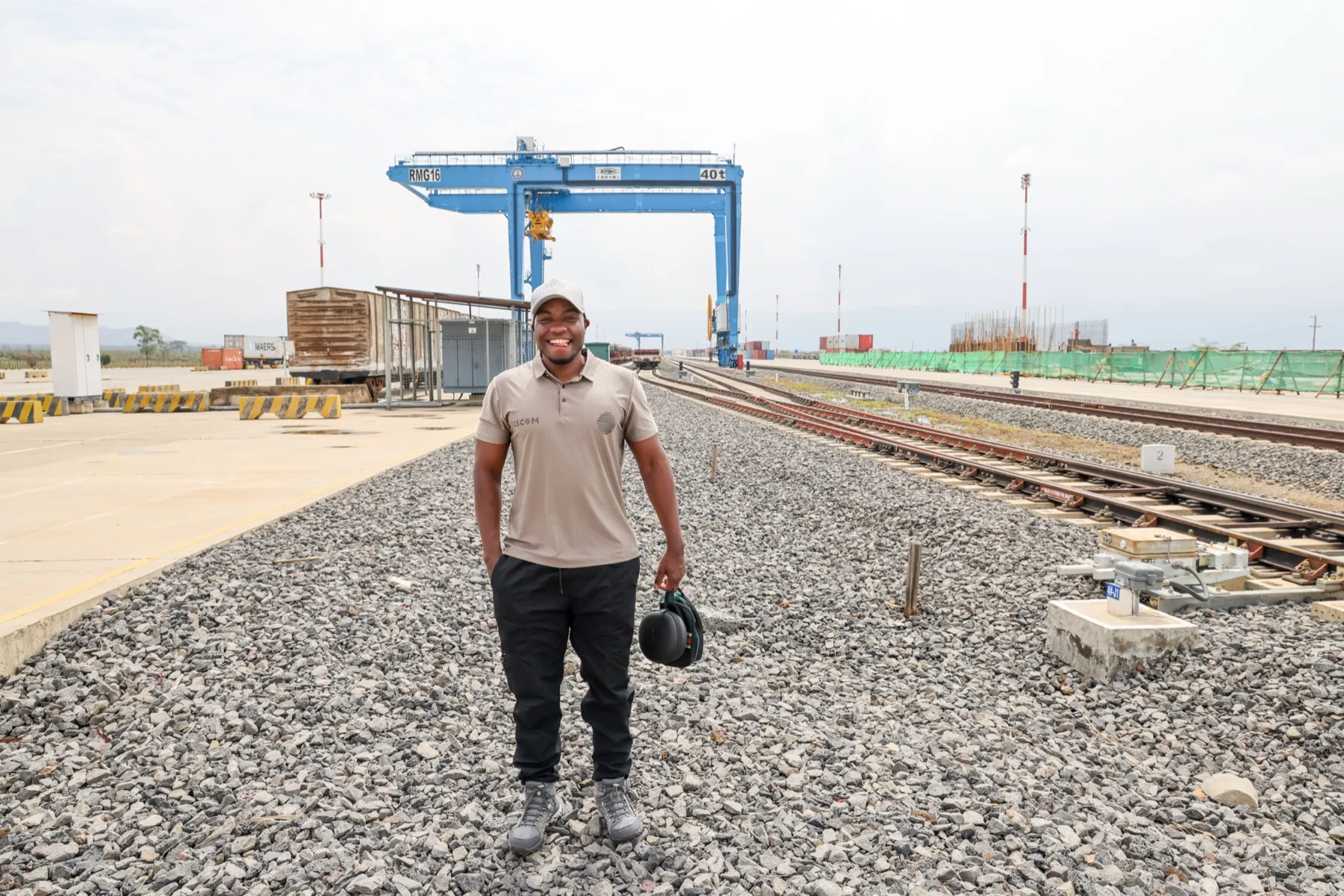
The inland container depot beside the Naivasha SEZ, showing a gantry crane, freight yard and the Standard Gauge Railway
The inland container depot beside the campus, on the Standard Gauge Railway. This is how the modules arrive
Navon ● verified
Power and site · Stage 01
Secured

Power is the reason this site exists. Naivasha sits in Kenya's geothermal heartland, so roughly 95 percent of the baseload is renewable, and more importantly it is steady. Geothermal does not stop at night or wait for wind.

A stable renewable baseload plus a verified PUE of 1.29 is what brings the cost of a compute-hour down, and that number carries all the way up the stack into the price of a token. The land is a thousand acres inside a Special Economic Zone, which gives duty-free equipment imports and a clear jurisdiction for data residency, with 24-hour security, perimeter control and CCTV by Securex.

#geothermal #sez

The 90 MVA substation serving Hells Gate, Naivasha SEZ, showing the open-air switchyard, perimeter wall and dual transmission feed
The substation serving the campus, Naivasha SEZ
Navon ● verified
Why we own the base · Stage 00
First post

You cannot build a sovereign AI company on rented compute. Every layer above the metal inherits the jurisdiction, the pricing and the failure modes of the metal it runs on. If that metal belongs to someone else, in someone else's region, the sovereignty is a contract term rather than a physical fact, and contract terms get renegotiated.

So we started at the bottom and are building up. Nairobi is at capacity, demand for compute is not, governments are legislating for data residency, and Tier III supply outside a handful of hubs is thin. The window to secure regional capacity on your own terms runs from now to 2030.

One more thing worth saying at the start. If you only want the foundation, that is a complete product and not a trojan horse. We run the building, the power and the cooling, and what you build above the rack is yours to own, brand and sell. Everything higher up the stack is something you opt into. Your customers stay your customers.

#builtinpublic #sovereigncompute

Our thesis Mission Stage 00
The receipts

Four numbers from the foundation everything else stands on.

The layers above are only as sovereign, and only as cheap, as the metal underneath them. These are the measured figures for that metal, and each one is why the price of a token further up the stack works.

Efficiency
1.29
Verified PUE at a 400 kW load, against a global average between 1.55 and 1.60. More of each kilowatt reaches the chip.
Speed
9–12
Months from order to live capacity per module. A traditional build takes twenty-four to thirty-six.
Power
95%
Geothermal share of the baseload. Renewable, and steady enough to run a data centre on without a hedge.
Track record
300+
Tier III deployments delivered by our manufacturing partner across five continents.
Size it yourself

How much of the foundation do you need?

If you are bringing your own hardware, this is the layer you buy, and most people arrive knowing their rack count and roughly how hard each rack works. That is enough to see the shape of a deployment. Move the sliders and the numbers below follow.

Indicative only. A module carries 400 kW of IT load across twenty racks. Facility draw applies the verified PUE of 1.29. Final sizing and pricing are confirmed at contract. If you would rather not run hardware at all, the cloud layer above this one is the answer instead.

Racks12
Power per rack20 kW
Workload
240 kW
IT load
310 kW
Facility draw at 1.29
1 module
Modules required

That fits inside a single module. Twenty racks at 20 kW is exactly what one 400 kW module is built to carry, which is the density AI training and inference actually need.

Next

Start at whichever layer you need.

Some people want racks and their own hardware. Some want cloud without owning anything. Some are waiting for inference metered by the token. Tell us which one you are and what you are trying to run, and we will size it, send the deep-dive and give you indicative terms. If the fit is wrong we will tell you that instead.

Site
Naivasha SEZ, Kenya